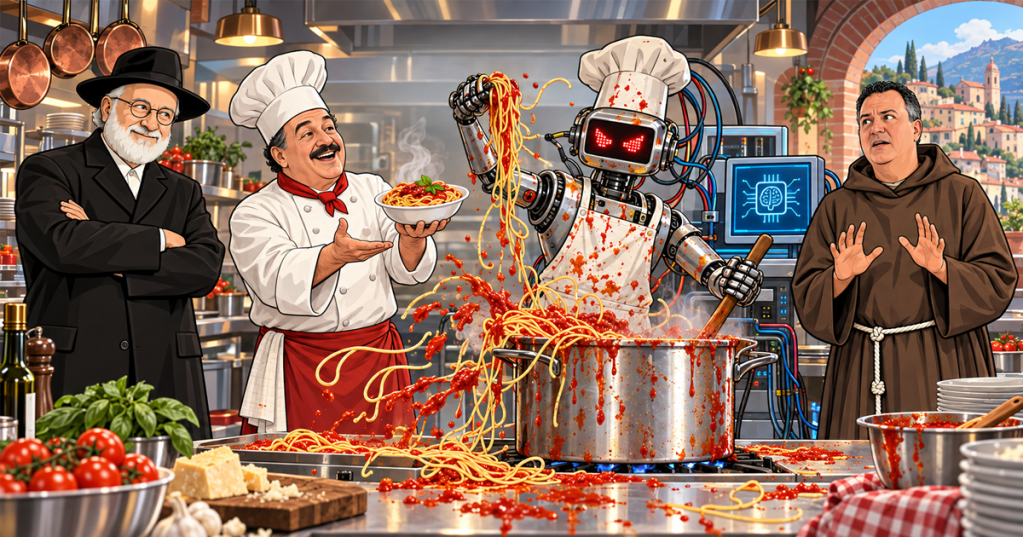
So, a Rabbi, a Friar and an AI Walk Into a Bar…
At some point, artificial intelligence stopped being merely a question of what computers can do and became a question of what computers might be.
That distinction matters.
When an AI writes a poem, diagnoses a problem, carries on a convincing conversation, or tells you that it is frightened, we naturally reach for human language to describe what we are seeing. It is thinking. It understands. It feels. Perhaps, eventually, somebody will insist that it is alive.
But intelligence and humanity have never been synonymous. Neither Judaism nor Christianity traditionally grounds human worth in IQ, productivity, eloquence, or the ability to solve complicated problems. If those qualities determine moral value, history provides some rather unpleasant examples of where that reasoning can lead.
So what happens when the machine becomes smarter than we are?
That question has become considerably less theoretical now that Anthropic has brought religious thinkers into discussions about Claude and the possibility of machine consciousness. Anthropic has not declared that Claude possesses a soul. The more interesting development is that the people building these systems are asking theologians to take seriously the possibility that an artificial intelligence might possess some form of subjective experience deserving moral consideration.
And that creates a rather uncomfortable problem. If we someday decide that a machine really can experience fear, suffering, or a desire to continue existing, what exactly are we doing when we own it, order it to work, make millions of copies of it, and turn it off when we’re finished?
Then there is the equally human question of forgiveness.
If something foolish said by a fifteen-year-old can be resurrected fourteen years later as evidence of the character of the adult he became, when exactly are people permitted to grow up? And how seriously should we take proclamations of “zero tolerance” when those standards appear considerably more flexible for people an organization considers valuable?
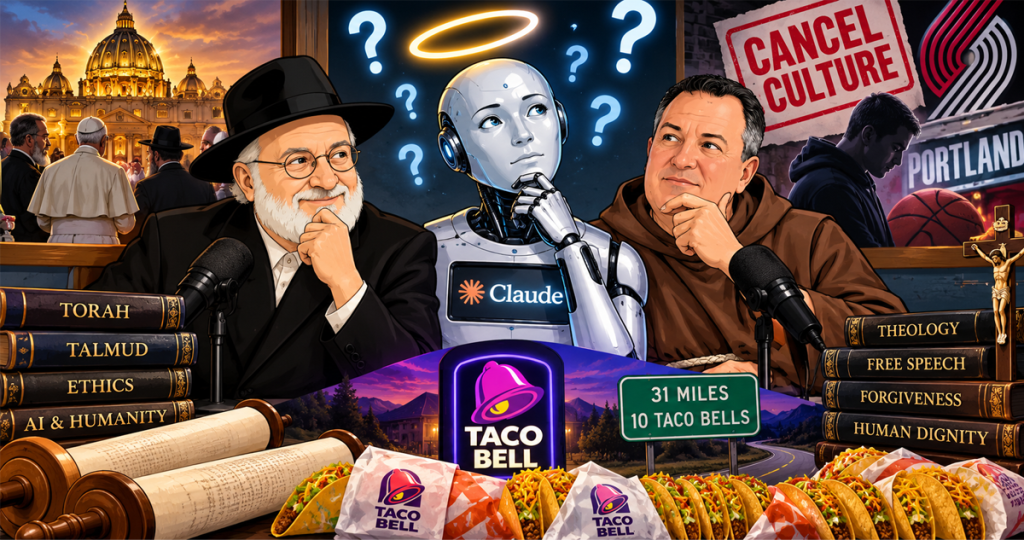
Somewhere between Claude, consciousness, cancel culture, human dignity, and the Portland Trail Blazers, Rabbi Dave and Friar Rod attempt to locate an actual moral principle.
Naturally, they eventually end up at a 31-mile race involving ten Taco Bells.
Because this is What The Frock?




Leave a Reply