Fake news, public executions, political tribalism, and the increasingly lost art of admitting we don’t know.
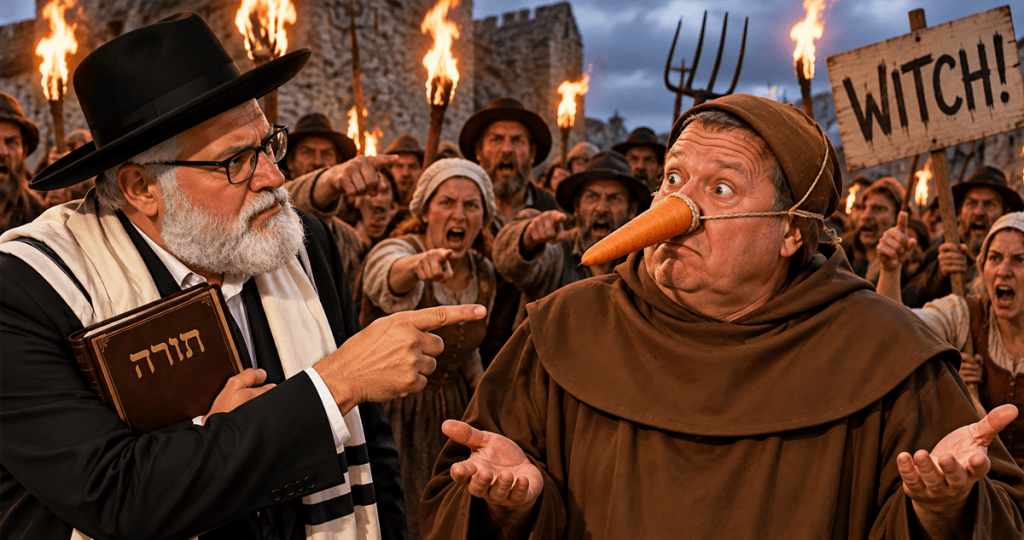
There was a time when people believed witches were responsible for their sheep dying. They didn’t understand viruses, infectious diseases, or the mechanisms by which illness spread through a flock. What they understood was that their sheep were dying, their livelihoods were disappearing, and somebody had to be responsible.
So they found somebody.
Once a witch had been identified, the question was no longer whether the accusation was true. The question became whether everyone agreed with it. Anyone who questioned the accusation risked becoming a suspect themselves.
Several centuries later, humanity has learned a great deal about infectious diseases. Modern technology allows people to communicate instantly across the globe, and more information is available to the average person than at any previous moment in history.
Yet somehow, the witch hunts continue.
Today, the accusations travel through social media rather than village gossip. A sensational allegation appears online, confirms what thousands of people already believe about a politician they dislike, and spreads before anyone bothers to establish whether it is true.
The political affiliation of the accused hardly matters. Conservatives and progressives alike have demonstrated an extraordinary willingness to accept damaging allegations about their opponents while demanding overwhelming evidence when similar accusations involve their own side.
Confirmation bias has become something resembling a national pastime.
Even more troubling is the growing expectation that everyone must immediately declare a position on every controversy. Complicated legal disputes become political loyalty tests. Unresolved allegations produce demands for public condemnation. The simple admission that the available evidence is insufficient to reach a conclusion becomes grounds for suspicion.
Apparently, even birdwatching is no longer safe from political tribalism.
There is an ancient Jewish concept called machloket l’shem shamayim, disagreement for the sake of Heaven. It recognizes that principled disagreement can serve a valuable purpose when the participants are genuinely seeking truth rather than merely attempting to defeat one another.
Such disagreements require intellectual humility, an acknowledgment that even strongly held convictions may be incomplete or mistaken.
That humility is becoming increasingly difficult to find.
The problem becomes considerably more serious when public outrage intersects with criminal justice. The controversy surrounding the possibility of livestreaming the execution of convicted Fort Hood shooter Nidal Hasan raises questions about punishment, vengeance, public spectacle, and the dignity of human life.
A society may conclude that certain crimes warrant the death penalty. Whether that punishment should become something for the public to watch is an entirely separate moral question.
Jewish and Christian traditions offer important perspectives on that distinction, particularly the principle that human dignity does not simply disappear when someone commits a terrible crime.
History provides ample evidence of what happens when punishment becomes entertainment, just as it demonstrates the consequences of allowing accusations to substitute for evidence.
And that brings the conversation back to the witches.
A fascinating discovery involving sheeppox and centuries-old religious manuscripts offers a reminder of how readily frightened communities once attributed misfortune to malicious human activity. Without an understanding of the actual causes of disease, suspicion became accusation, and accusation could become persecution.
The modern equivalents may be less likely to involve an actual stake and a pile of firewood, but the underlying human impulses remain remarkably familiar.
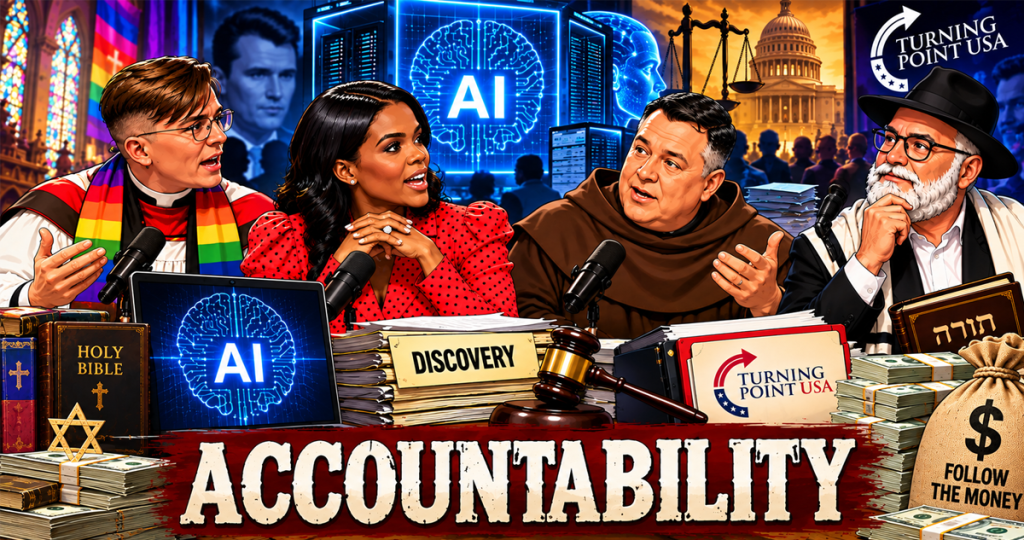
This week’s What The Frock? brings Rabbi Dave and Friar Rod together for a conversation about misinformation, ideological purity tests, capital punishment, religious morality, and the dangers of confusing certainty with knowledge.
There is also the matter of a burning fence, which has somehow moved from being a recurring joke on the program to an actual neighborhood emergency. Apparently, life occasionally decides that satire needs a practical demonstration.
Beneath the humor, however, is a serious question.
When did being right become more important than finding out what is true?
The greatest danger of a witch hunt is not simply that someone makes a false accusation. People have always done that. The danger comes when a community decides that questioning the accusation is itself evidence of guilt.
At that point, truth becomes secondary to belonging, disagreement becomes disloyalty, and justice becomes whatever the loudest voices demand.
Perhaps the most important words in modern public discourse are also the ones people seem increasingly unwilling to say.
I don’t know.
Join Rabbi Dave and Friar Rod for another edition of What The Frock?, where faith, history, politics, and the absurdities of modern life collide, and where asking uncomfortable questions remains considerably more important than demanding comfortable answers.






Leave a Reply