According to the best available information, which is to say two guys with microphones, a partially functioning computer, and a breaking news alert glowing at full brightness in a dark theater, this episode of What the Frock? begins exactly where most modern confusion begins: in the middle of it.
Dave’s voice is hanging on by a thread, Rod’s headphones have declared independence, and somewhere in Washington, D.C., a man has attempted to force his way into the White House Correspondents’ Dinner with enough weaponry to suggest he misunderstood the phrase “armed with questions.” What follows is not certainty, because certainty is in short supply, but a running commentary on what is known, what is suspected, and what is already being shaped into narrative before the facts have had time to put their shoes on.
There are details, of course. Names, locations, timelines. A suspect. A response. A room full of very important people suddenly discovering that ducking under tables is still a viable life skill. And then there is the detail that no one can quite let go of: one man, in the middle of all this, calmly continuing to eat mashed potatoes. History is like that. It rarely gives you clean symbolism, but occasionally it hands you a spoon and says, “Work with this.”
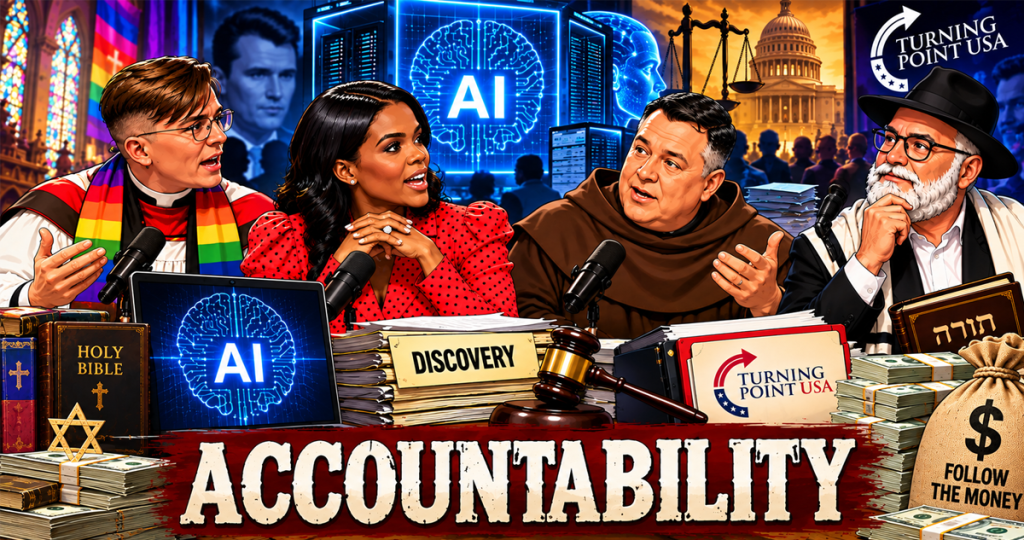
From there, the conversation does what it always does. It refuses to stay in one place. The incident becomes a question, the question becomes a pattern, and the pattern becomes something far more unsettling. What if the systems designed to fight problems are, at times, quietly feeding them? The discussion turns to funding, influence, and the strange economics of outrage, where the line between opposition and participation begins to blur in ways that would make a Vogon bureaucrat proud.
And just when you think you have a handle on that, the ground shifts again. Gambling enters the picture, not as a vice whispered about in smoky rooms, but as a brightly lit, state-approved revenue stream. The numbers are large enough to require scientific notation, and the logic is simple enough to be dangerous. People are not just betting on outcomes anymore. They are betting on layers of outcomes, outcomes within outcomes, like a Russian nesting doll designed by a casino. The house, as always, is not worried.
Threaded through all of this is the human element, stubborn and unpolished. A concert that wrecks a voice. A phone screen that blinds half a theater. A lifelong attachment to Neil Diamond that somehow survives everything else. These are not distractions. They are the point. Because no matter how large the story becomes, it is always experienced at ground level, by people who are trying to make sense of it while also deciding whether they should have just stayed home.
So what is this episode really about?
It is about the uncomfortable suspicion that things are not always what they claim to be. It is about systems that profit from the problems they describe. It is about the quiet realization that the world is less a neatly organized plan and more a series of overlapping improvisations, some of them brilliant, some of them deeply questionable.
And, in at least one case, it is about a man who decided that if the world was going sideways, he was not going to let perfectly good mashed potatoes go to waste.
Which, all things considered, may be the most rational decision anyone made that night.






Leave a Reply